Introduction
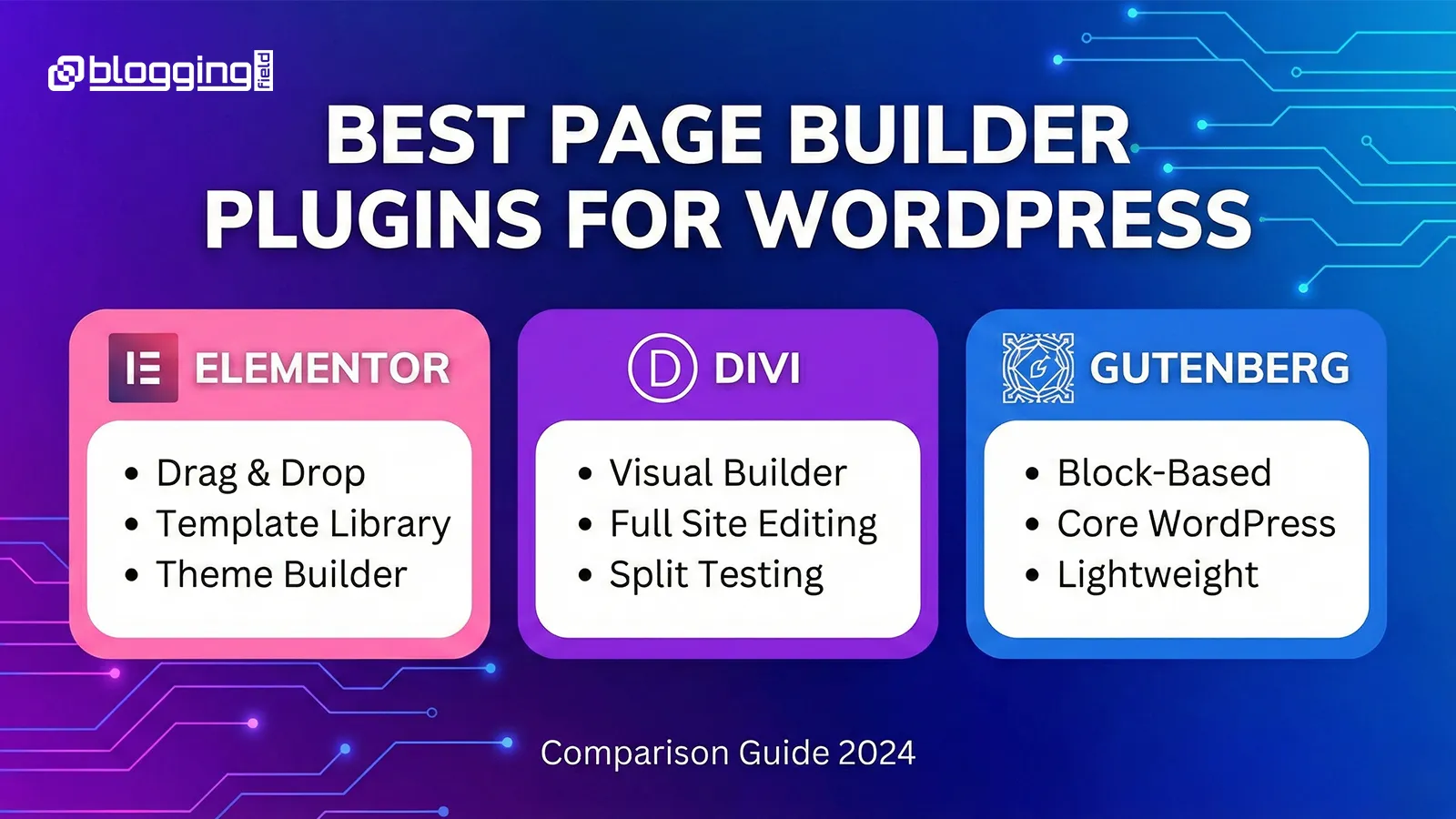
Choosing the right page builder plugin is one of the most important decisions when building a WordPress website. Whether you’re a beginner, a designer, or a developer, the page builder you choose directly affects your site’s speed, design flexibility, user experience, and overall workflow. In 2025, the three most popular and powerful page builders remain Elementor, Divi, and Gutenberg. Each one is widely used but designed for different types of users and website goals.
In this guide, we’ll compare Elementor vs Divi vs Gutenberg based on:
✔ Features
✔ Ease of Use
✔ Design Flexibility
✔ Performance
✔ Pricing
✔ Best Use Cases
✔ Pros & Cons
Let’s dive deep and help you choose the perfect page builder for your WordPress website.
1. Elementor – Most Popular & Beginner-Friendly Page Builder
Elementor is one of the most widely used WordPress page builder plugins, powering millions of websites. Known for its intuitive drag-and-drop interface, Elementor lets anyone design professional, responsive websites — without writing a single line of code.
Key Features of Elementor
Elementor offers a massive library of pre-built templates, widgets, and design blocks. You can easily customize every element, from headers and footers to forms and animations. Elementor Pro unlocks advanced features like Theme Builder, Popup Builder, WooCommerce Builder, and dynamic content. With these tools, you can build any type of website — from blogs to eCommerce stores — with full creative freedom.
Ease of Use
Elementor’s interface is simple, visual, and user-friendly, making it ideal for beginners and non-technical users. The real-time preview helps you see changes instantly, reducing design time. Even advanced users enjoy its flexibility and speed.
Performance
In recent years, Elementor has improved its performance with cleaner code output and reduced DOM size. However, it still may not be as lightweight as Gutenberg due to its extra styling layers.
Pricing
Pros
Extremely easy to use
Huge template and widget library
Works for any type of website
Visual drag-and-drop builder
Strong community and add-ons
Cons
2. Divi Builder – Best for Designers & Agencies
Divi by Elegant Themes is another powerful page builder known for its design flexibility and lifetime pricing model. It is ideal for users who want complete creative control and access to hundreds of professional templates.
Key Features of Divi
Divi offers a true visual editing experience with hundreds of layout packs and design modules. It provides advanced design settings, custom CSS integration, global elements, and split-testing — something no other page builder offers natively. Its built-in theme and builder combo is great for agencies managing multiple client sites.
Ease of Use
Divi has a slightly steeper learning curve compared to Elementor, especially for beginners. However, once you understand the interface, it becomes extremely powerful — offering deep customization for every element.
Performance
Divi has improved its speed significantly with dynamic CSS, reduced file sizes, and performance optimization updates. Still, it may feel heavier than Gutenberg for some users.
Pricing
Pros
Cons
3. Gutenberg – Fastest & Most Lightweight (Default WordPress Editor)
Gutenberg is WordPress’s default block editor introduced in WordPress 5.0. It has evolved far beyond a simple content editor and is now a full site-building tool with site editor, block patterns, global styles, and powerful design options.
Key Features of Gutenberg
Gutenberg provides block-based editing with reusable blocks, patterns, layout controls, and native integration with WordPress functions. It is incredibly lightweight and optimized for performance. In 2025, more themes and plugins fully support Gutenberg, making it a serious competitor to third-party page builders.
Ease of Use
Gutenberg is simpler than Elementor and Divi if you only need basic layouts. However, it may feel limited for complex designs unless you use block plugins like Kadence Blocks, Spectra, or GenerateBlocks.
Performance
Gutenberg is the fastest page builder available since it is built into WordPress and doesn’t load additional scripts. It’s ideal for speed-optimized websites and SEO-focused users.
Pricing
Pros
Fastest and most lightweight
Native WordPress experience
No extra plugin required
Great for SEO and performance
Works well with modern block themes
Cons
Elementor vs Divi vs Gutenberg – Side-by-Side Comparison
| Feature | Elementor | Divi | Gutenberg |
|---|
| Ease of Use | ⭐⭐⭐⭐⭐ | ⭐⭐⭐⭐ | ⭐⭐⭐⭐ |
| Design Flexibility | ⭐⭐⭐⭐⭐ | ⭐⭐⭐⭐⭐ | ⭐⭐⭐ |
| Performance | ⭐⭐⭐⭐ | ⭐⭐⭐⭐ | ⭐⭐⭐⭐⭐ |
| Pricing | Free + Pro | Premium | Free |
| Best For | Beginners & all users | Designers & agencies | Speed-focused & simple sites |
Which Page Builder Should You Choose?
Choose Elementor if:
You want an easy, visual builder with powerful features and templates. Perfect for beginners, bloggers, small businesses, and WooCommerce stores.
Choose Divi if:
You’re a designer, developer, or agency who needs unlimited customization and loves the idea of lifetime pricing.
Choose Gutenberg if:
You prioritize performance and simplicity, want fast-loading SEO-friendly pages, or prefer a free native solution.
Conclusion
Choosing between Elementor, Divi, and Gutenberg depends entirely on your website goals.
If you want full design control with ease, Elementor is a fantastic choice.
If you’re an agency or designer who wants advanced styling and lifetime access, Divi stands out.
If performance, speed, and core WordPress compatibility matter most, Gutenberg is unbeatable.
Frequently Asked Questions (FAQs)